
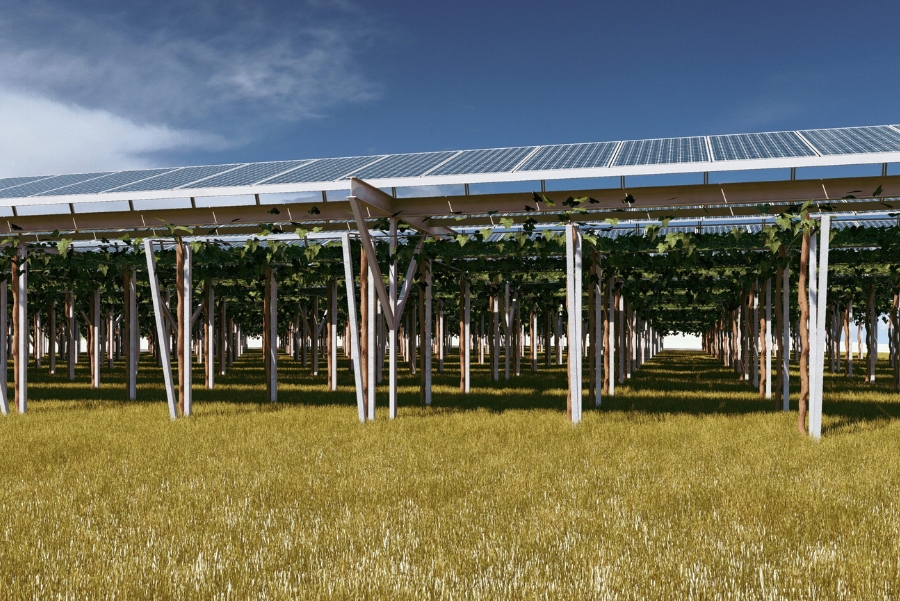
In recent years, the renewable energy sector has seen a growing interest inagrivoltaics, an innovative technology that combines solar power generation with agricultural activity. This solution makes it possible to optimize land use while ensuring the generation of clean energy and the continuity of agricultural activities. It also provides a concrete response to the need to reduce dependence on fossil fuels and improve the resilience of the agricultural sector to climate change. The design of agri-voltaic systems is a complex process that requires engineering, environmental and agronomic skills to ensure a balance between energy production and agronomic needs. Adoption of this technology is growing rapidly due to the environmental and economic benefits it offers both farmers and energy companies.
What is an agrivoltaic system?
An agrivoltaic system is a system that integrates photovoltaic modules on agricultural land, allowing the production of electricity without compromising plant cultivation or animal husbandry. Compared with traditional photovoltaic systems, which can occupy entire areas of land, agrivoltaics uses elevated or steerable structures that allow sunlight to reach the crops below.
This technology is particularly useful in settings where extreme weather can damage crops, offering protection from excessive sunlight or adverse weather events. In addition, agrivoltaic systems can be integrated with smart irrigation systems, further improving crop efficiency and reducing water consumption.
The main advantages of an agri-voltaic system include:
- Dual land use: allows the same land to be used for two purposes, increasing overall productivity.
- Crop protection: panels can reduce the negative effects of climate change, such as droughts, hailstorms and high winds, improving agricultural yields.
- Energy efficiency: photovoltaic modules can cool from moisture generated by crops, improving performance and reducing the risk of overheating.
- Economic sustainability: farmers can benefit from additional income from energy sales, diversifying their income and reducing dependence on agricultural subsidies.
The design of an agri-voltaic system
The design of an agrivoltaic system requires detailed site analysis, agronomic assessment, and technical planning to ensure optimal integration of solar energy and agricultural production. Each step in the process must be carefully designed to avoid negative impacts on crop yields and to maximize energy efficiency.
1. Site analysis
The choice of location is a crucial aspect of ensuring maximum plant performance. Several parameters must be evaluated, including:
- Solar irradiance: critical in determining the production capacity of the plant.
- Soil type: some soils are more suitable than others for the coexistence of agriculture and PV.
- Suitable crops: plant selection should consider the level of shading and adaptability to the presence of the panels.
- The slope and orientation of the land: affect the arrangement of modules and the access of farm machinery.
- The availability of connections to the power grid: to assess the feasibility of feeding the energy produced into the national grid.
2. Selection of photovoltaic technology
Agrivoltaic systems use specific structures to optimize the interaction between sunlight and agriculture. Among the most popular solutions are:
- Raised panels: installed on tall structures that allow the growth of plants below and the passage of agricultural vehicles.
- Semi-transparent panels: allow light to partially filter through, reducing shading and promoting photosynthesis.
- Dynamic solar tracking systems: modules that automatically tilt to maximize energy production and adjust the amount of light on crops.
3. Agronomic planning.
Integration of PV and agriculture must be carefully planned to avoid reductions in agricultural productivity. The crops selected must be compatible with the degree of shading generated by the panels. Some examples of suitable crops include:
- Vegetables: tomatoes, zucchini, salads, which can benefit from reduced evaporation.
- Fruit plants: vines, olive trees, apple trees, which are well adapted to partial shade.
- Livestock fodder: grasses and legumes used to feed livestock.
4. Regulatory and authorization aspects
The design must comply with current regulations for agri-voltaic installations, including environmental and landscape protection laws. Obtaining the necessary permits from local and national agencies to ensure project compliance is essential. In addition, government incentives and subsidized financing can make these systems an even more beneficial investment for farmers.
5. Integration with the power grid
The energy produced by agrivoltaic systems can be used for farm self-consumption or fed into the national power grid. It is essential to design an efficient connection system that optimizes the economic performance of the plant and ensures a quick return on investment.
The design of agri-voltaic systems represents one of the most innovative solutions for combining renewable energy production with agricultural activity. This approach optimizes land use, improves crop resilience to climate change and generates economic benefits for farmers. Relying on experts in the field, such as Mpower, means ensuring an effective, sustainable and state-of-the-art project.