
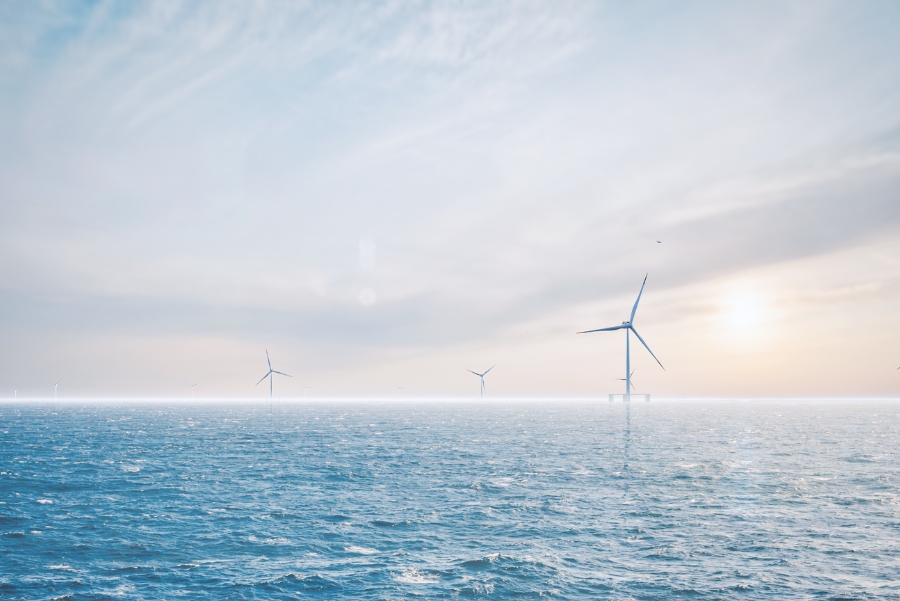
In recent years, wind power has taken a central role in the global energy transition, with the goal of reducing CO2 emissions and fostering a sustainable future. This renewable source harnesses the power of wind to generate electricity cleanly and efficiently, offering an alternative to fossil fuels. Among the various technologies available, offshore wind farms stand out for their high efficiency and reduced environmental impact compared to their onshore counterparts. But what exactly are they and how do they work? What advantages do they offer over traditional wind farms, and what challenges do they face in becoming an even more widespread solution?
Wind power plants: onshore vs offshore
A wind power plant is a power generation system that uses the power of wind to generate electricity through wind turbines. There are two main types of wind power plants:
Onshore wind considers plants installed on land, often on windy hills or plains. They are easier to install and maintain, but can have visual and noise impacts on local communities.
In contrast,offshore wind refers to facilities located offshore, generally several miles from the coast. They benefit from stronger and more consistent winds, increasing energy production and reducing visual and noise impacts on inhabited areas.
Characteristics of an offshore wind farm
Offshore wind power plants have some distinctive characteristics compared to onshore wind power plants:
- Increased efficiency: the wind at sea is stronger and less prone to obstacles, which allows for higher and more consistent energy production.
- Reduced environmental and social impact: being far from populated areas, they do not generate significant acoustic or visual disturbances.
- Higher installation and maintenance costs: offshore construction and operation require advanced technologies and specialized equipment.
- Increased durability: turbines are designed to withstand extreme weather conditions, such as strong winds and high waves.
What does an offshore wind farm look like?
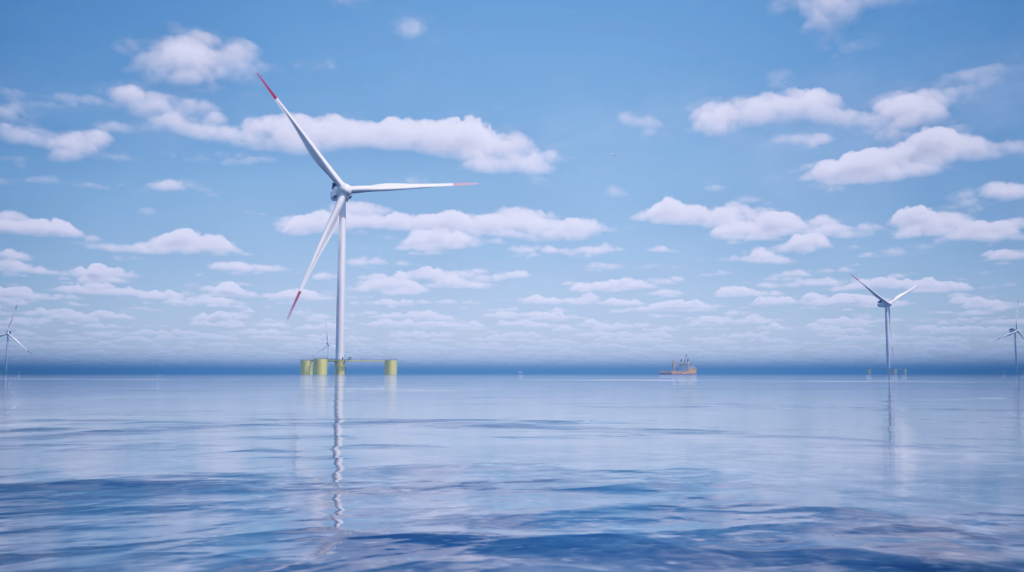
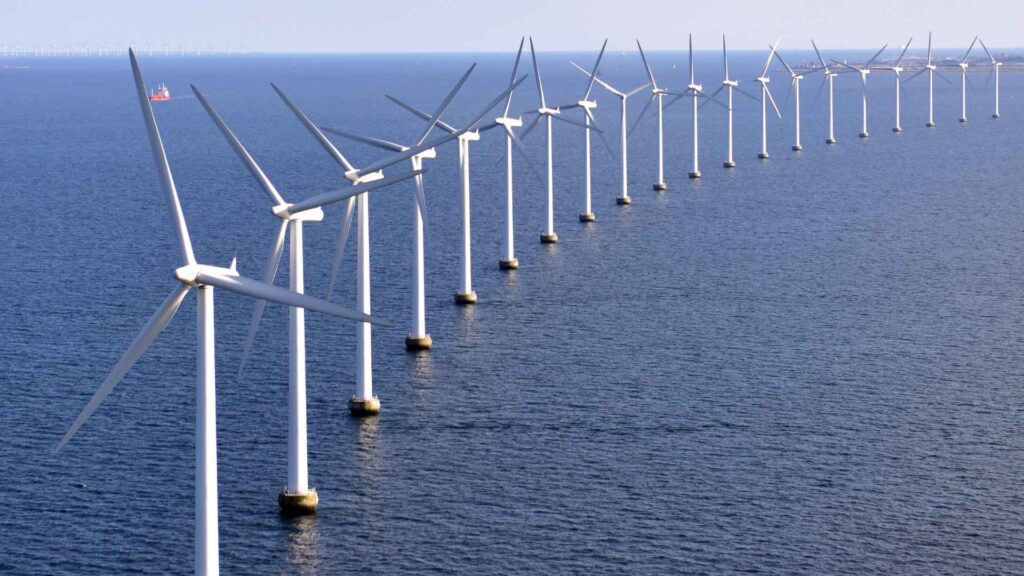
An offshore wind farm consists of several key elements:
- Wind turbines: tall structures equipped with blades that rotate by the force of the wind. Offshore turbines can reach heights of more than 150 meters and generate up to 15 MW of power each.
- Foundations: there are different types of foundations, including monopiles (for shallow water), jackets (lattice structures for medium depths) and floating platforms (for water depths over 50 meters).
- Submarine cabling: high-voltage cables carry the energy produced by turbines to the electrical substation.
- Offshore substation: collects and converts energy before sending it to the power grid on land.
- Transmission cables: undersea connections that transport generated electricity to the national grid.
How does an offshore wind farm work?
The operation of an offshore wind farm follows a well-defined process:
- Wind capture: turbine blades move by the force of the wind, generating kinetic energy.
- Conversion to electricity: a generator located in the turbine nacelle converts mechanical energy into electricity.
- Transmission to the substation: the energy produced is sent to the offshore substation to be transformed into high-voltage power.
- Transport to the mainland: through submarine cables, electricity reaches the substation on the coast, where it is fed into the national power grid.
- Power distribution: electricity is finally distributed to homes, industries and other users.
The future of offshore wind energy
Offshore wind represents one of the most promising solutions for a sustainable energy future. Thanks to technological innovations, such as floating turbines and improvements in energy storage systems, these facilities are becoming increasingly efficient and affordable. Companies like Mpower, which specialize in the design of renewable energy plants, are playing a crucial role in the development of these technologies, contributing to the global energy transition.
With the expansion of offshore wind, Italy and other European countries are investing in new projects to harness the potential of offshore wind and reduce dependence on fossil fuels. Thanks to these developments, the future of offshore wind energy looks increasingly promising.